
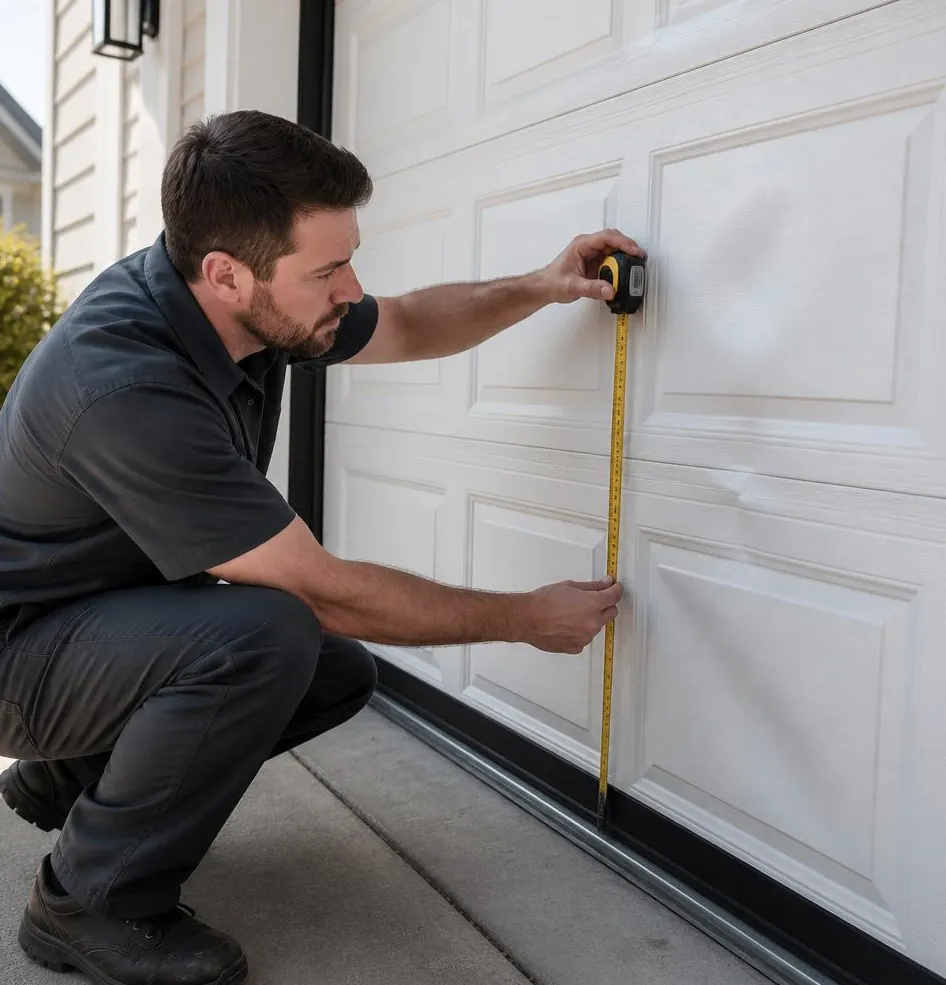
You Hear It Before You See It
It usually starts as a sound, not a sight. You hit the opener button and instead of the smooth roll you're used to, the door hesitates, jerks, or lets out a metallic scrape on one side. Maybe it's just at the top of the opening, maybe it happens the whole way down. You step into the garage to look, and that's when you notice the door isn't sitting flush anymore — one corner seems to hang a little lower, or the panel looks faintly twisted against the frame.
This is almost always a track problem. The tracks are the steel rails that guide the rollers up and down, and they're bolted to the door frame under real tension. When one section bends, even slightly, the rollers stop riding smoothly inside it. The door has to fight its way past the bent spot every time it moves, which is why you hear the noise before anything looks obviously wrong.
Signs the Track Is Bent or Out of Alignment
- The door jerks or hesitates at a specific point in its travel, always in the same spot
- A visible gap opens up between a roller and the track, or the roller looks like it's riding on the edge of the rail instead of inside it
- The door hangs crooked when it's open, with one bottom corner lower than the other
- Grinding or scraping sounds, especially near the bend itself
- The door won't close all the way, stopping an inch or two short and reversing
- The opener strains or trips its safety reverse more often than it used to
None of these get better on their own. A track that's slightly bent today will usually bend further with repeated use, because the rollers keep forcing their way past the same damaged spot.
What Causes It, in the Order a Technician Checks
1. Impact Damage
This is the first thing a technician rules out, because it's the most common and the easiest to spot. A bumper tap from backing out too fast, a ladder leaned against the rail, or a stray gust during a storm pushing something into the door can all knock a track section out of true. The bend is usually localized — a kink in one spot rather than a gradual curve. Fixing it depends on severity: minor bends can sometimes be straightened in place, but anything more than a slight kink usually calls for replacing that section of track rather than risking a repeat failure.
2. Loose or Shifted Mounting Hardware
Tracks are held to the frame with brackets and lag screws, and in this climate, wood jambs swell and contract with humidity more than people expect. That movement works screws loose over months, and a track that's lost even a little of its anchoring will flex under the door's weight every time it runs. The fix here is straightforward — re-anchoring the brackets, sometimes relocating screws to solid wood if the original holes have worn out — but it only works if it's caught before the flexing itself bends the rail.
3. Rust and Corrosion at the Joints
Where sections of track bolt together, or where brackets meet the rail, moisture collects and sits. In humid conditions with salt air drifting inland after storms, these joints are where rust starts first. Corrosion weakens the metal and lets small amounts of shifting turn into real misalignment over time. A technician checks these joints for pitting and scale, and if corrosion has set in, the damaged hardware or section gets replaced rather than just tightened back down — rusted bolts don't hold torque the way new ones do.
4. A Warped or Damaged Panel Pulling on the Rollers
Sometimes the track isn't the original problem. A door panel that's taken a dent, or one that's absorbed enough moisture to warp slightly, pulls unevenly on the rollers attached to it. Over time that uneven pull can drag the track out of alignment even though the track itself started out fine. This is why a technician checks the panel condition before assuming the track is the root cause — if a bowed panel is doing the damage, the panel needs attention too, or the track will just bend again.
5. Frame or Foundation Settling
Last on the list, because it's the least common and the hardest to fix, is the structure itself. Florida soil moves with seasonal moisture, and over years a garage frame can settle slightly out of square. When that happens, the track mounting points are no longer in the same plane they were installed in, and no amount of re-anchoring the track alone will hold a lasting fix. This usually means adjusting the track position to match the new frame geometry, not just reattaching it where it used to be.
Why This Matters More Heading Into Storm Season
A door with a bent or misaligned track doesn't seal or seat the way it's designed to, which matters when wind-load performance depends on the door closing fully and locking into its track evenly on both sides. A door that's been forcing its way past a bend for months is also more likely to come off the track entirely under the kind of wind pressure that shows up in a bad storm.
When to Call Clarksville Garage Door
If your door is jerking, scraping, or hanging crooked, don't keep running it hoping it'll work itself out — that just turns a track repair into a track-and-panel repair. Clarksville Garage Door handles Off Track Door Repair for doors that have already jumped the rail, and Garage Door Tune-Up & Maintenance for catching loose hardware and early corrosion before they turn into a bent track at all. We'll check the track, the rollers, the panel, and the mounting points, and tell you plainly what's causing the problem before we fix it.
If your garage door is grinding, hesitating, or sitting crooked, call Clarksville Garage Door today — we serve Clarksville, FL and the surrounding area, and we can usually get a technician out fast.