
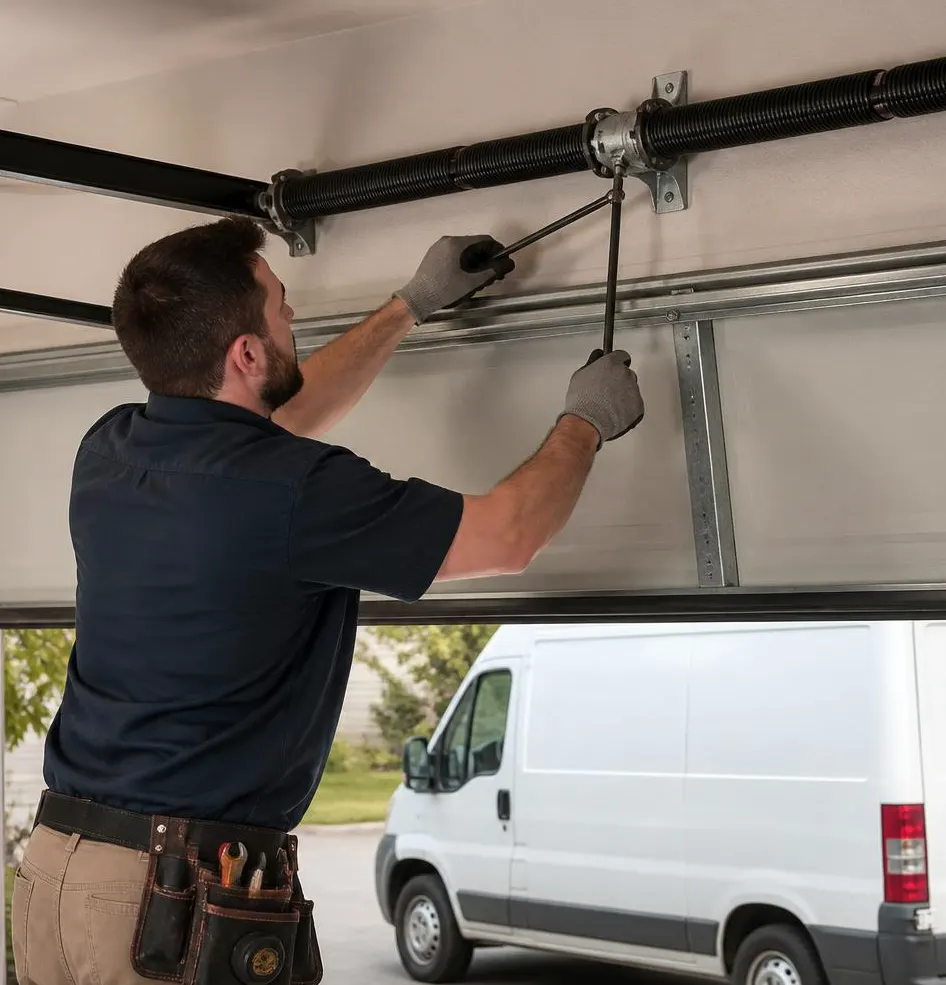
For most homes in and around Clarksville, FL, an insulated steel garage door is the best overall choice. It holds up to wind-load requirements, resists the swelling and rot that humidity causes in wood, and costs less to maintain than fiberglass or composite over time. That said, each material has real trade-offs worth understanding before you buy, especially with hurricane season weather and salt-tinged coastal air part of life out here.
What This Climate Does to a Garage Door
Before comparing materials, it helps to know what they're up against. Afternoon downpours and high humidity drive moisture into any seam or scratch in the finish. Homes closer to the coast deal with salt air that accelerates corrosion on hardware and thin metal panels. And because this area sits in a hurricane-prone zone, doors need to meet wind-load ratings, which means the door's construction and bracing matter as much as the skin material.
Steel Garage Doors
Steel is the most common choice for good reason. A quality steel door is available in wind-rated models built specifically for storm-prone regions, with reinforced tracks and heavier gauge panels that resist buckling in high wind. Insulated steel (two layers of steel with a polyurethane or polystyrene core) also helps keep garage temperatures down during Florida summers, which matters if your garage shares a wall with living space.
- Pros: strong wind-load options, low maintenance, wide range of styles and price points, holds paint well
- Cons: can dent from impact, uninsulated versions transmit heat and noise, bare steel will rust if the finish is scratched and not touched up
- Typical cost range: roughly $900–$3,000 installed depending on insulation and style, though this varies by supplier
Wood Garage Doors
Wood doors look great and can be custom-stained, but humidity is genuinely hard on them. Moisture gets absorbed into the panels, causing swelling that makes the door stick in its tracks, followed by shrinking once it dries out, which leads to warping and gaps. Afternoon storms accelerate this cycle. Wood also needs more frequent refinishing here than it would in a drier climate to prevent rot at the bottom panel, which sits closest to standing water after heavy rain.
- Pros: custom look, can be repaired panel by panel, strong insulating properties
- Cons: high maintenance in humid climates, prone to warping and rot, heavier doors need a well-matched opener
- Typical cost range: roughly $1,500–$5,000+ installed depending on wood species and custom work
Aluminum Garage Doors
Aluminum won't rust, which sounds like a perfect fit for salt air near the coast. The catch is that it dents easily and flexes more than steel in high wind, so it's a tougher sell for wind-load compliance unless you choose a heavier-gauge, reinforced model built for coastal use. Lighter aluminum doors are better suited to detached garages or lower-wind-exposure situations than to a primary attached garage in a storm-prone area.
- Pros: rust-proof, lightweight (easier on older openers), low maintenance
- Cons: dents more easily than steel, lower-end models don't meet wind-load needs, can feel less secure
- Typical cost range: roughly $1,000–$3,500 installed, more for heavy-gauge wind-rated versions
Fiberglass Garage Doors
Fiberglass resists rot, rust, and salt corrosion, which makes it appealing for coastal-adjacent homes. It also won't warp from humidity the way wood does. The downside is impact resistance: fiberglass can crack or shatter in a way steel won't, particularly from wind-driven debris during a storm, and once cracked it's harder to repair cleanly than a dented steel panel.
- Pros: rust and rot resistant, holds paint and texture well, good for a wood-look finish without wood's maintenance
- Cons: can crack or shatter on impact, fewer wind-rated options, costs more than basic steel
- Typical cost range: roughly $1,200–$4,000 installed
Composite Garage Doors
Composite doors are built from recycled wood fiber and resin, designed to mimic real wood without the swelling and rot problems. They hold up well to humidity and don't need the frequent refinishing wood does, making them a reasonable middle ground for homeowners who want a wood look without the upkeep.
- Pros: wood appearance with better moisture resistance, low maintenance, stable in humidity
- Cons: higher upfront cost, fewer wind-rated models on the market, heavier than steel or aluminum
- Typical cost range: roughly $2,000–$5,000 installed
Our Recommendation for Typical Homes Here
For a standard single-family home in Clarksville or the surrounding towns, insulated steel with a wind-rated certification is the most practical balance of durability, cost, and storm readiness. If you're closer to the coast and worried about long-term corrosion, a heavier-gauge aluminum or fiberglass door built for wind resistance is worth pricing out. Wood makes sense mainly for homeowners set on a custom look who are willing to keep up with refinishing every couple of years.
When to Call Clarksville Garage Door
If your current door is showing rust at the bottom panel, sticking in the tracks after rain, or you're simply not sure whether it meets current wind-load expectations, that's worth a second opinion before the next storm season. Clarksville Garage Door handles New Garage Door Installation for homeowners weighing these material trade-offs, and we also do Garage Door Tune-Up & Maintenance visits to catch early rust, track misalignment, or hardware wear before it turns into an off-track emergency.
If you're planning a replacement or just want an honest read on what your current door can handle, call Clarksville Garage Door. We serve Clarksville, FL and the surrounding area, and we're glad to walk through your options in person.